Exercises for Over 50s
Build a balanced routine with strength, cardio, flexibility and balance exercises designed for your needs.
A well-rounded exercise program should incorporate four critical components: strength, cardiovascular fitness, flexibility, and balance. The general recommendation is at least 150 minutes of moderate-intensity aerobic activity per week, plus strength and balance work on two or more days.
Strength Training
Essential for combating sarcopenia, improving bone density, and maintaining the ability to perform daily tasks.
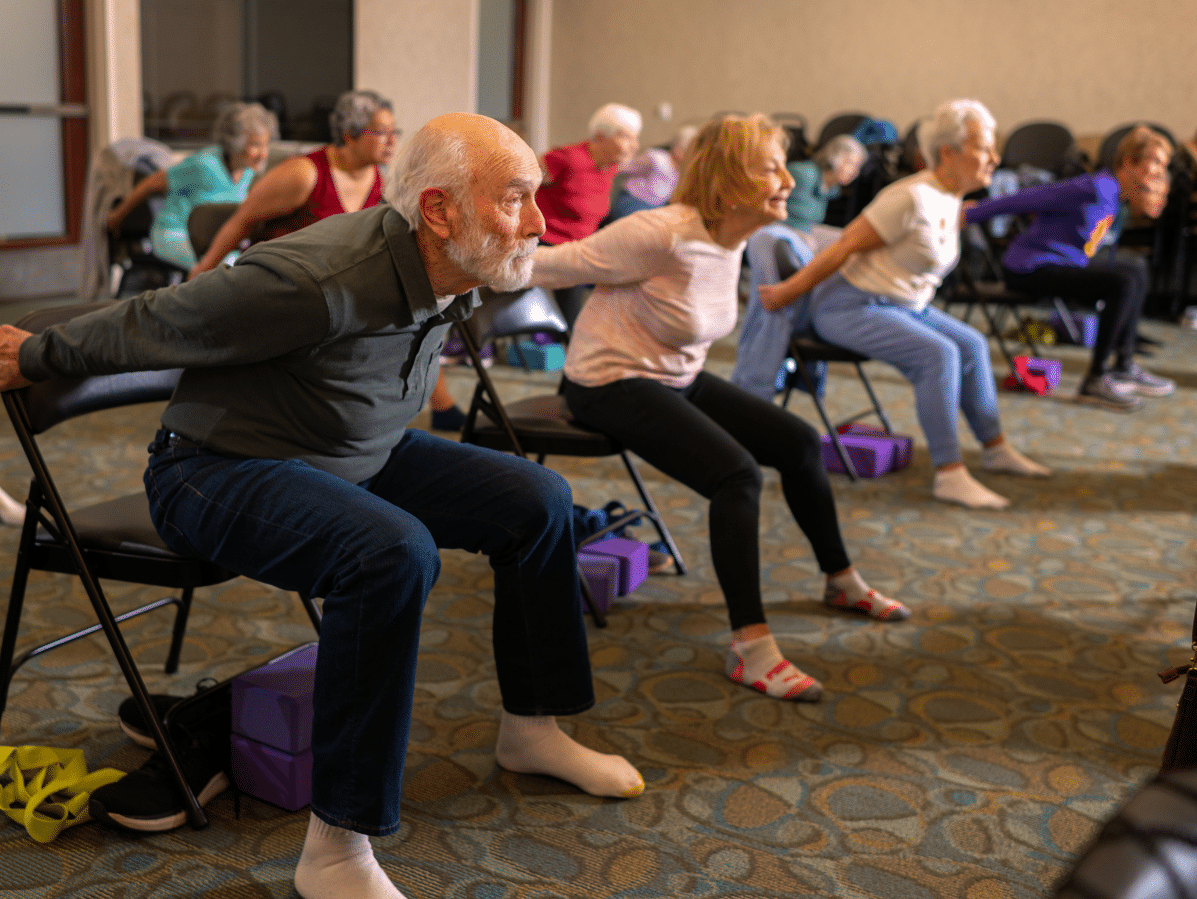
Chair Squats
Stand in front of a sturdy chair, lower hips back and down as if to sit, lightly touch the chair then stand back up. Strengthens legs and glutes.
Wall Push-ups
Stand arm's length from a wall, place hands wider than shoulders. Lean forward bending elbows, then push back. Builds upper body strength.
Glute Bridges
Lie on your back with knees bent, lift hips until body forms a straight line from shoulders to knees. Targets core and glutes.
Resistance Band Curls
Sit or stand on a resistance band, curl hands toward shoulders keeping elbows at sides. Great for arm strength.
Cardiovascular Exercise
Elevates heart rate, improves lung function, and lowers the risk of heart disease, diabetes, and stroke.
Brisk Walking
An accessible low-impact exercise. Aim for a pace where you can talk but are slightly breathless. Target 8,000–10,000 steps daily.
Swimming / Water Aerobics
Non-weight-bearing and ideal for those with joint pain. Provides a full-body workout improving cardiovascular and muscle health.
Cycling
Whether outdoors or stationary, cycling builds leg strength and endurance with minimal joint stress.
Flexibility & Mobility
Maintains range of motion, improves posture, and can alleviate stiffness and arthritis symptoms.
Yoga or Tai Chi
Combines movement, stretching and breathing to improve joint mobility, posture and balance. Tai Chi is especially effective for balance and heart health.
Overhead Stretch
Sit or stand tall, clasp hands together and reach overhead, feeling a stretch through sides and shoulders. Hold 15–30 seconds.
Balance Exercises
Critical for preventing falls, which are a major health risk for older adults.
Single-Leg Stand
Hold a sturdy chair, lift one foot off the floor and hold 10–30 seconds. Repeat on the other side. Gradually reduce support as you improve.
Heel-to-Toe Walk
Walk in a straight line placing the heel of one foot directly in front of the toes of the other. Improves coordination and stability.
Follow Along: Gentle Full-Body Workout
Safety Tips
Consult your doctor before beginning a new exercise regimen, especially with pre-existing conditions.
Start slow and progress gradually. Begin with shorter durations and lower intensity.
Always warm up for 5–10 minutes and cool down with stretching to prevent injury.
Listen to your body. Pain is a sign to stop or modify an activity. Allow adequate rest between workouts.
Stay hydrated. Drink water before, during, and after exercise.